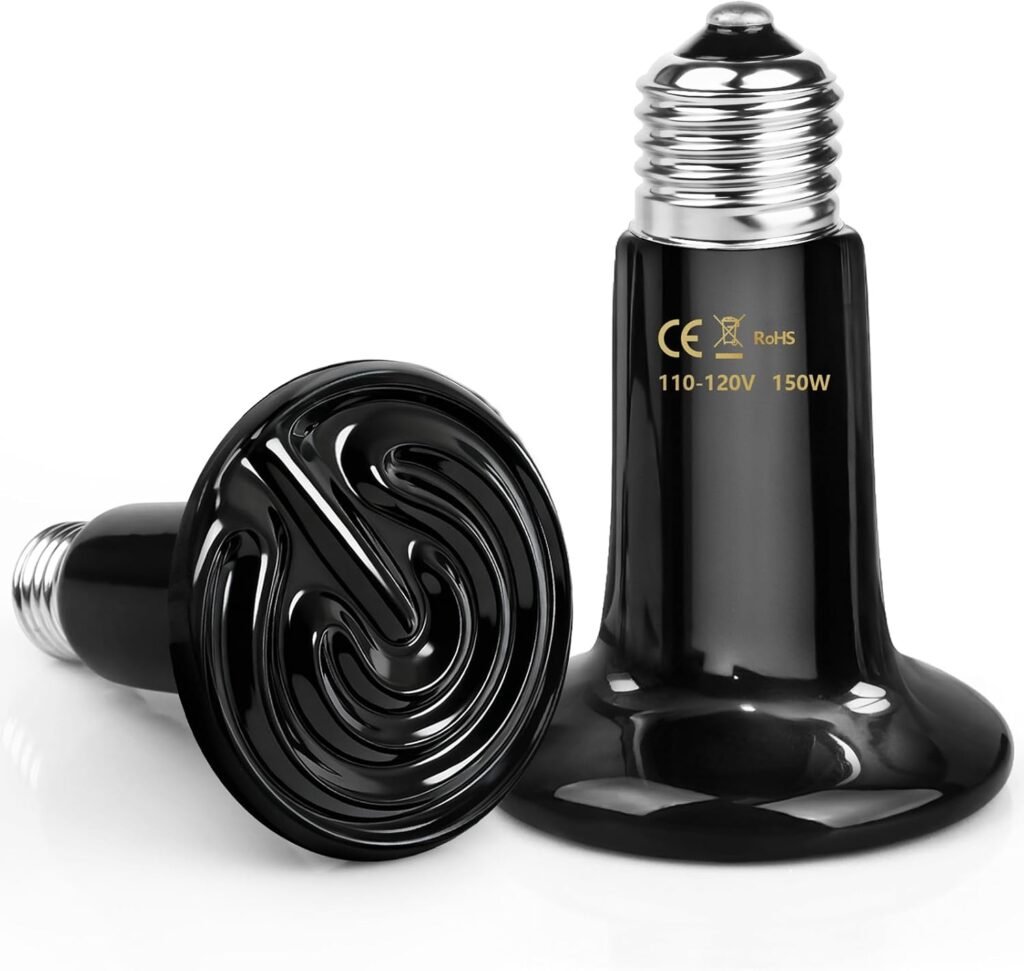
150W Ceramic Heat Emitter Bulb – E26 Base, No-Light Reptile Heat Lamp

Maintaining a suitable temperature inside a reptile enclosure is an important part of responsible pet care. The Ceramic Heat Emitter Bulb is designed to provide heat without producing visible light, making it an option for suitable enclosures where nighttime darkness needs to be maintained.
This product is advertised as a 150W ceramic heat emitter with a standard E26 screw base and 120V compatibility. Its ceramic construction and internal heating element are designed to convert electrical energy into heat rather than visible illumination.
One important detail to check before purchasing: the supplied product description also mentions a 75W version in its final feature statement. Confirm the actual wattage printed on the bulb and packaging before installation.
Product Overview
Unlike a conventional visible-light bulb, a ceramic heat emitter is designed to provide radiant heat without illuminating the enclosure. This can be useful for keepers who want to maintain darkness during the night while providing an additional heat source.
The product description highlights a thickened ceramic body and a high-resistance alloy heating element. It also describes the ceramic material as heat-resistant and suitable for repeated heating use.
The E26 base is a standard screw fitting, but the bulb must only be used with a suitable, heat-rated ceramic lamp holder and fixture that can safely support its actual wattage.
Key Features
1. Heat Without Visible Light
The ceramic emitter is designed to produce heat without visible illumination. This allows an enclosure to remain dark while the heater is operating, which may be useful for maintaining a nighttime light cycle.
2. Ceramic Body Construction
The bulb features a ceramic outer body, which the seller describes as thickened and heat-resistant. Ceramic construction is intended to withstand the high operating temperatures associated with this type of heater.
3. High-Resistance Heating Element
According to the product description, the internal heating element uses a high-resistance alloy to convert electrical energy into heat.
4. Standard E26 Screw Base
The bulb uses an E26 screw fitting and is advertised for 120V electrical systems. Check your fixture and local electrical supply before use; a matching screw base alone does not guarantee electrical compatibility.
5. Advertised Long Service Life
The seller states an estimated service life of approximately 10,000 hours. Actual lifespan can vary depending on installation, operating conditions, temperature changes and product quality.
6. Designed for Suitable Pet Enclosures
The listing markets the heat emitter for reptile, amphibian and bird enclosures. Heating requirements differ significantly between species, so the correct temperature range and heating arrangement should always be based on the animal’s needs.
Specifications
| Specification | Details |
|---|---|
| Product Type | Ceramic heat emitter bulb |
| Advertised Wattage | 150W (verify: description also mentions 75W) |
| Base Type | E26 screw base |
| Advertised Voltage | 120V |
| Body Material | Ceramic |
| Heating Element | High-resistance alloy, as described by the seller |
| Visible Light | No visible light intended |
| Estimated Lifespan | Approximately 10,000 hours, seller claim |
| Suggested Application | Suitable reptile and pet enclosures |
Potential Uses
- Providing supplemental heat in suitable reptile enclosures.
- Maintaining warmth without adding visible light at night.
- Heating appropriate terrarium setups with a compatible fixture.
- Supporting temperature management in suitable amphibian habitats.
- Use in other suitable animal enclosures where this type of heat source is appropriate.
Installation and Safety Advice
Ceramic heat emitters operate at very high temperatures. Correct installation and temperature monitoring are essential to protect both animals and their enclosure.
- Check the wattage first: The title specifies 150W, but the description also mentions 75W. Do not install until the actual bulb rating is confirmed.
- Check voltage: The product is advertised for 120V. Do not connect it directly to a different supply voltage unless the manufacturer explicitly confirms compatibility.
- Use a heat-rated ceramic socket: The fixture must be rated for the bulb’s actual wattage and operating temperature. Ordinary plastic lamp holders may not be suitable.
- Prevent direct contact: Keep the emitter out of reach of animals and use an appropriate protective guard to prevent burns.
- Maintain safe clearance: Keep suitable distance from bedding, wood, plastic, fabric and other combustible materials. Follow the fixture and bulb instructions.
- Monitor temperatures: Use reliable thermometers to check both the warm and cooler areas of the enclosure. Do not rely on the bulb’s wattage alone to determine the correct temperature.
- Consider a thermostat: Use an appropriate thermostat or temperature controller where recommended for the species and heating setup.
- Allow cooling before handling: Switch off and allow the bulb to cool completely before touching, cleaning or replacing it.
- Inspect regularly: Stop using the bulb if the ceramic body, base or fixture becomes damaged.
Final Thoughts
This ceramic heat emitter is designed for people who need supplemental warmth without visible light in a suitable pet enclosure. Its ceramic body, E26 screw base and advertised 120V compatibility are useful details when checking whether it fits a particular heating setup.
However, the wattage discrepancy between the 150W title and the 75W statement in the description should be resolved before buying or installing it. Always confirm the actual rating, use a suitable heat-rated fixture and monitor enclosure temperatures to maintain a safe environment for your animal.